Workplace Exposure Limits Are Changing in 1 week: Is Your Workplace Prepared?
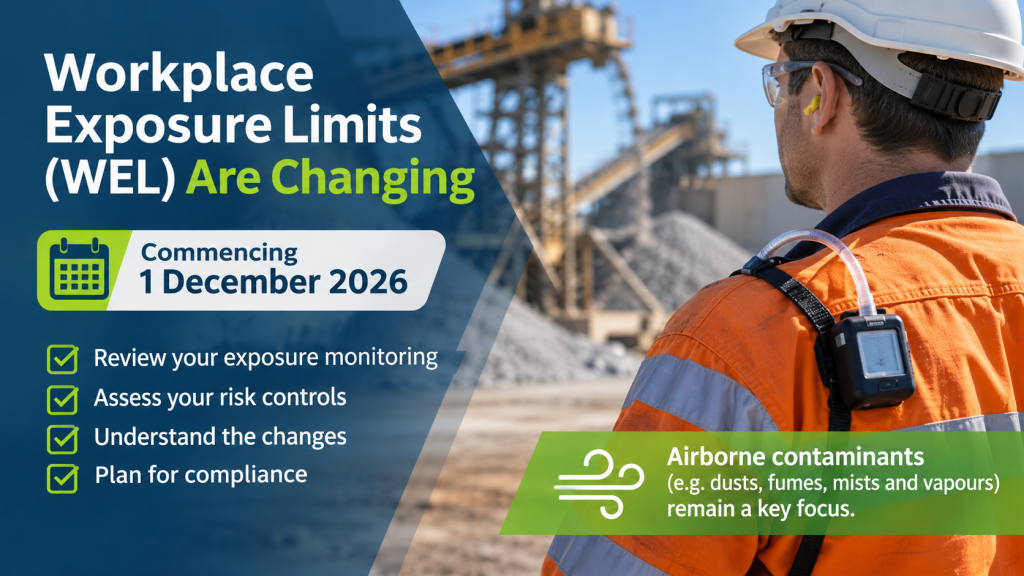
Australia moves from Workplace Exposure Standards (WES) to Workplace Exposure Limits (WEL) on 1 December 2026.
The change brings new exposure limits for a range of airborne contaminants, including some dusts, fumes, vapours and chemicals found in workplaces across the country.
Industries likely to be affected include:
🔹 Mining and mineral processing
🔹 Manufacturing and engineering
🔹 Welding and metal fabrication
🔹 Construction and building materials
🔹 Food production and processing
🔹 Automotive and industrial maintenance
What does this mean for WA employers?
Check that your occupational hygiene monitoring results, risk assessments and exposure controls still hold up under the new limits. Results that are compliant today may not be after 1 December.
WorkSafe WA has published a statement of regulatory intent covering the first 12 months. During that time it will focus on education, guidance and working with industry. However, existing WHS duties still apply, and WorkSafe can still take enforcement action where there is a serious risk to health and safety.
How can our team help?
WHP’s occupational hygiene team helps businesses identify, assess + manage exposure to airborne contaminants, with services including:
✅ Personal + static airborne contaminant monitoring
✅ Inhalable and respirable dust sampling
✅ Respirable crystalline silica assessments
✅ Welding fume and airborne metals monitoring
✅ VOC and chemical vapour monitoring
✅ Assessment of results against the applicable exposure limits
✅ Practical recommendations for managing exposure risk
With the new limits starting in days, now is the time to review your monitoring program. We can build one around your processes, contaminants and exposure risks.